Long before photographs, souvenirs or stamps in a passport, a pilgrim who reached the Holy Land faced a practical problem: how do you prove you were really there? In Jerusalem, one family has been answering that question for more than seven hundred years, in ink.
The Jerusalem episode of Blood, Ink & Soul, our documentary series on religious tattooing, is built around Nizar Razzouk — the twenty-eighth generation of the oldest tattooing family in the world.
A code on the wrist
The Razzouks began in Egypt in the 1300s, tattooing Coptic crosses on the wrists of children only months old. The placement was not decoration. It was a code: you shook a hand, glimpsed the cross, knew this person was one of yours — and the church doors opened. Around the 1600s the family travelled to Jerusalem as pilgrims themselves and simply stayed. “This is where everything happened,” Nizar says. “This is where Jesus walked.” Documents place them in the city by the 1700s.
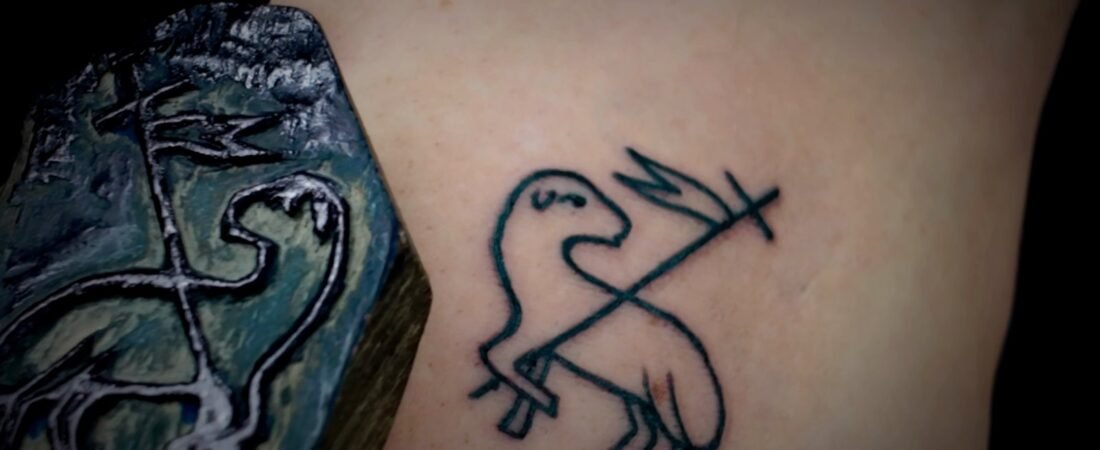
There were no printers and no stencil paper, so the family carved their designs into olive wood, pressed the inked blocks onto skin and followed the lines by hand with a needle. Those blocks are still in the shop, and still in use.
Older than the word
The practice predates the vocabulary we use for it. Early Christians called the wounds of Jesus stigmata — the same word then used for tattoos, centuries before European voyages to the Pacific brought back “tattoo”. Rome branded slaves and condemned prisoners with letters cut into the skin; some Christians began taking that mark voluntarily, as a way of sharing what their brothers had suffered. By the fifth century, Procopius of Gaza was already describing the custom among Christians living in Jerusalem.
Where is your Hajj?
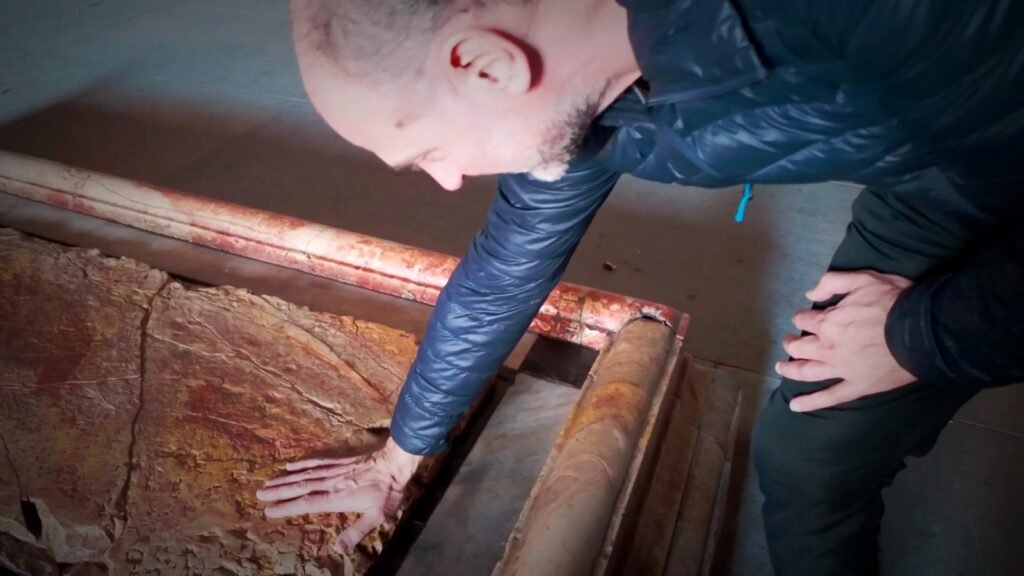
Some of the shop’s most faithful customers are Iraqi Christians who fled when ISIS arrived and resettled in the United States, Canada and Australia. A second passport lets them return. They ask for a cross and a year, and they call it their Hajj: in their churches abroad, the question comes back as a challenge. Where is yours? A few want the work done inside the Church of the Holy Sepulchre itself, with a priest saying a prayer over the fresh mark.
Not everyone approves. Some Christians cite the old prohibition on marking the body; Nizar’s reply is practical, since his clients include priests and bishops. There is one request he does turn down: ash from a dead relative mixed into the ink.
Two quiet years
Since the war began, the pilgrims stopped coming. The family used the emptiness to take the stamps abroad, tattooing in Scotland, Italy and across the United States. What Nizar misses, he says, is not the income.
It’s not about money. It’s that we feel we have somebody with us.
That is what these marks have always done. A tattoo made in Jerusalem was never only a souvenir. It proved you had been there — and it proved you did not come back the same.
Watch the episode
The Jerusalem film, and the rest of the series, is available at https://www.youtube.com/@LivedReligionInitiative